Hey there! I’m a supplier of Fiber – Reinforced Tape, and today I wanna talk about how the loading rate affects the mechanical properties of this awesome product. Fiber-Reinforced Tape
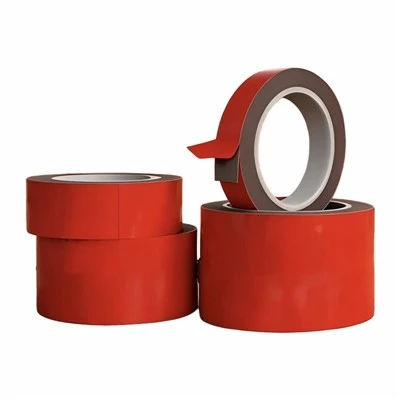
First off, let’s get a bit of background. Fiber – Reinforced Tape is pretty cool stuff. It combines high – strength fibers, like carbon or glass, with a resin matrix. This gives it some really great mechanical properties, such as high strength – to – weight ratio, good stiffness, and amazing corrosion resistance. And it’s used in all sorts of industries, from aerospace and automotive to sports equipment and construction.
Now, the loading rate. What the heck is that? Well, it’s basically how fast you apply a load to the Fiber – Reinforced Tape. Think of it like pushing on something. If you push super slowly, that’s a low loading rate. But if you give it a quick, hard shove, that’s a high loading rate.
Let’s start by looking at how the loading rate impacts the strength of the tape. At low loading rates, the tape has more time to respond to the applied load. The fibers and the resin matrix can work together in a more relaxed way. The resin has time to transfer the load evenly between the fibers. So, the tape can often reach its full potential strength. It’s like when you’re doing a puzzle slowly. You have time to find the right pieces and fit them together perfectly.
But when the loading rate is high, things change. The tape doesn’t have that luxury of time. The load is applied so quickly that the resin might not be able to transfer the stress as effectively. This can lead to some fibers taking on more load than others. As a result, the tape might fail at a lower stress level than it would at a low loading rate. It’s a bit like trying to do that same puzzle in a rush. You might make mistakes and end up with a less perfect result.
Another mechanical property that’s affected is the stiffness. Stiffness is all about how much an object resists deformation when a load is applied. At low loading rates, the tape deforms in a more predictable way. The fibers and resin act in harmony, and the overall stiffness is pretty stable.
However, at high loading rates, the tape’s stiffness can increase. This is because the high – speed loading causes some internal changes in the material. The fibers and resin have less time to move and adjust, so they kind of lock together more tightly. It’s like when you try to bend a piece of wood slowly; it bends easily. But if you try to bend it really quickly, it seems stiffer and might even break.
Ductility is also influenced by the loading rate. Ductility is the ability of a material to deform plastically before it breaks. At low loading rates, the Fiber – Reinforced Tape can often deform quite a bit. The resin can flow and the fibers can re – orient themselves, allowing for some plastic deformation.
On the other hand, at high loading rates, the tape becomes more brittle. There’s not enough time for the plastic deformation mechanisms to kick in. So, instead of deforming gradually, it’s more likely to break suddenly. It’s like a piece of glass. If you apply a slow force, it might bend a little. But if you hit it hard and fast, it shatters.
Now, why does all this matter for us as suppliers and for our customers? Well, understanding how the loading rate affects the mechanical properties helps us choose the right type of Fiber – Reinforced Tape for different applications.
For example, in the aerospace industry, where components might experience high – speed impacts during flight, we need to use tapes that can handle high loading rates well. We can select tapes with specific fiber and resin combinations that are more resistant to brittle failure at high speeds.
In the automotive industry, during normal driving, components often experience low – to – medium loading rates. But in the event of a crash, they’re suddenly exposed to high loading rates. So, we need to provide tapes that can perform well under both conditions.
In construction, where structures are subject to long – term, slow – acting loads like the weight of the building itself, we focus on the low – loading – rate properties of the tape. The tape needs to maintain its strength and integrity over time.
As a supplier, I’ve seen firsthand how important it is to be able to advise our customers on the right product for their needs. I’ve had clients come to me with all sorts of projects, and being able to talk about how the loading rate affects the mechanical properties of the tape has been crucial.
I’ve also seen the importance of testing our tapes under different loading rates. We have a state – of – the – art testing facility where we can simulate various real – world loading conditions. This allows us to accurately assess how our tapes will perform and make any necessary adjustments to our manufacturing process.
So, if you’re in an industry that uses Fiber – Reinforced Tape, or if you’re just curious about this amazing material, I’d love to have a chat with you. Whether you’re working on a project that requires high – speed impact resistance or long – term, low – load durability, we’ve got the know – how to provide you with the best product.
If you’re interested in learning more about our Fiber – Reinforced Tape, or if you want to discuss your specific requirements, don’t hesitate to reach out. We’re always here to help and guide you through the process of choosing the right tape for your needs.

In conclusion, the loading rate has a significant impact on the mechanical properties of Fiber – Reinforced Tape. By understanding these effects, we can better serve our customers and ensure that our products perform optimally in a wide range of applications. So, if you think our Fiber – Reinforced Tape might be a good fit for your project, let’s start the conversation and see how we can work together!
Masking Tape References:
[1] T. W. Chou, "Composite Materials Science and Engineering", Springer Science & Business Media, 2012.
[2] K. L. Reifsnider, "Fatigue and Fracture Mechanics of Composite Materials", Elsevier, 1991.
[3] R. F. Gibson, "Principles of Composite Material Mechanics", CRC Press, 2012.
Haining Sunrich Adhesive Tape Products Co., Ltd.
As one of the most professional fiber-reinforced tape manufacturers and suppliers in China, we also support customized service. Please feel free to wholesale high-grade fiber-reinforced tape in stock here from our factory. Welcome to contact us for quotation.
Address: No. 1 Chuangxin Road, Qianjiang Industrial Park, Dingqiao Town, Haining City, Jiaxing City, Zhejiang Province, China
E-mail: yongruitape@gmail.com
WebSite: https://www.yongruii.com/
