If you’ve ever stood on the floor of a precision parts manufacturing shop, watching a double disc grinding machine hum through a 12-hour shift without a single hiccup, you know there’s a world of difference between a machine that’s just “good enough” and one that’s reliable. As a supplier of double disc grinding machines, I spend more time troubleshooting customer headaches than you might think—last quarter alone, I sat down with three shops that were losing 20% of their production time to inconsistent processing: parts coming out warped, surface finish fluctuating, or even the machine seizing mid-run. Most of them thought the problem was the machine itself, but after digging into their processes, I found 90% of the issues were avoidable with small, intentional changes to how they operated, maintained, and calibrated their equipment. Double Disc Grinding Machines
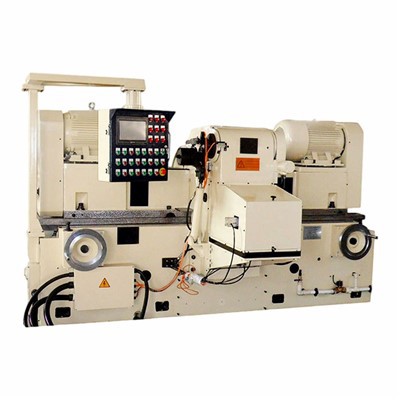
Processing stability isn’t just a buzzword for manufacturers—it’s the difference between meeting your delivery deadlines and paying late fees, between scrap parts eating into your profit margins and keeping your line running smoothly. Over 15 years in this industry, I’ve learned that stability starts with the little things, not just a big-ticket machine upgrade. Let’s break down exactly what you can do to get your double disc grinding machine performing consistently, shift after shift.
First, let’s talk about the foundation of any stable grind: machine calibration. I can’t tell you how many shops I’ve visited where the calibration logs are either missing or filled with generic notes like “calibrated last month.” Calibration isn’t a one-and-done task—it’s something that needs to be tied to your actual production schedule, not a calendar date. For double disc grinders, the key calibrations are parallelism between the two grinding wheels and the flatness of the worktable. When parallelism is off by even 0.005mm, you’ll get parts that are thicker on one side than the other, which leads to dimensional rejects.
I recommend a calibration frequency of every 500 working hours, or after every batch of 10,000 parts—whichever comes first. But here’s the mistake most people make: they skip the pre-calibration checks. Before you adjust the wheel alignment, you need to verify that the worktable is free of debris, that the wheel flanges are tightened properly, and that the spindle bearings aren’t showing excessive play. Last year, a client in the automotive parts industry was having trouble with camshaft lobes coming out with inconsistent thickness, and it turned out their spindle bearings had 0.02mm of lateral play—something they never checked before calibrating. By the time they adjusted the wheel alignment, they were just compounding the problem. If you’re not sure how to do a proper calibration, most reputable double disc grinding machine suppliers (including ours) offer on-site calibration training for your maintenance team—paying for that training once saves you hundreds in scrap parts every year.
Next up: grinding wheel selection and dressing, which is probably the single most impactful factor on processing stability. I’ve seen shops use the same type of wheel for every material, from soft aluminum to hardened steel, and wonder why their surface finish varies so much. Wheels aren’t one-size-fits-all, and choosing the wrong one will not only cause inconsistent results but also shorten wheel life and increase wear on your machine.
Let’s break this down simply. For soft, non-ferrous materials like aluminum or copper, you need a wheel with a porous structure and a relatively soft bond—this prevents the wheel from loading up (clogging with material chips) and keeps cutting edges sharp. For hardened steel or stainless steel, a harder bond with denser grit works better, because it holds the abrasive grains longer to maintain consistent cutting pressure. But even if you pick the right wheel for your material, poor dressing will kill stability. Dressing is the process of truing the wheel (making it perfectly flat and parallel) and sharpening it by removing dull grains and loading.
The key here is to dress the wheel when it needs it, not on a fixed schedule. If you’re following a set interval like “dress every 50 parts,” you might be dressing a perfectly good wheel too early (wasting time and wheels) or too late (causing rough parts and spindle strain). A better rule of thumb is to dress when you notice any of these signs: surface finish gets rougher, dimensional tolerance starts drifting, or the grinding force increases (you can check this on your machine’s load meter). Most modern double disc grinders have built-in load monitors, so use them—they’re designed to catch small changes in cutting force before they lead to big problems. I also always advise customers to use a diamond dressing roll instead of a single-point dresser. Diamond rolls provide uniform dressing across the entire wheel face, which is critical for parallelism and consistent part flatness. I had a client making hydraulic valve spools, which require a surface finish of Ra 0.2μm—they were using single-point dressing and getting inconsistent finishes, until we switched them to diamond rolls. Their scrap rate for those parts dropped from 8% to less than 1% within a month.
Now, let’s talk about something that’s often overlooked but makes a huge difference: material and workholding preparation. You could have a perfectly calibrated machine and the right wheels, but if the parts going in are dirty or not fixtured correctly, you’ll never get stable results. First, incoming parts should be cleaned and free of burrs, oil, or corrosion before they reach the grinder. Even a tiny burr on a part edge can cause the wheel to grab unevenly, leading to dimensional errors or wheel damage. I’ve seen shops skip this step because they think the grinder will clean the parts as it works, but that’s a myth—grinding burrs and debris will only make your grinding process less consistent.
Workholding is another critical piece. For double disc grinding, parts are held between the two worktables (or fixtures) that rotate as the wheels grind them. If the fixtures are worn, have loose clamps, or aren’t perfectly flat, each part will sit differently, leading to thickness variation. The biggest mistake I see here is not replacing worn fixtures on a regular basis. Fixture wear happens over time, especially when you’re grinding hard materials, and even a 0.01mm gap in a fixture can lead to parts shifting mid-grind. We recommend inspecting fixtures every 100 working hours and replacing them when wear exceeds 0.02mm. Also, make sure you’re using the right fixturing for your part geometry. For parts with odd shapes or thin walls, custom fixtures might be necessary to hold them securely without deformation—trying to use a standard fixture for an irregular part is a surefire way to get inconsistent results. A client in the aerospace industry was grinding thin titanium alloy brackets, which were deforming during the grind because their standard fixture didn’t distribute pressure evenly. Once we worked with their team to design a custom vacuum fixture, their part deformation dropped by 75% and they eliminated 10 hours of rework per week.
Then there’s the often-overlooked area of cooling and lubrication. Grinding generates a lot of heat, and if that heat isn’t controlled, it can cause parts to expand unevenly, leading to dimensional errors and even thermal damage to the machine or parts. The coolant system on a double disc grinder isn’t just for flushing away chips—it’s a critical part of maintaining process stability. First, make sure your coolant is the right type for your material. For ferrous metals like steel, a water-based coolant with rust inhibitors works best. For non-ferrous metals like aluminum, use a coolant designed for non-ferrous materials, because water-based coolants for steel can cause corrosion or discoloration on aluminum.
But even the best coolant won’t help if it’s contaminated. Over time, chips, oil, and bacteria build up in the coolant tank, turning it into a sludge that doesn’t cool or flush effectively. I recommend changing the coolant every 3 months (or every 500 working hours) and filtering it continuously—using a 10-micron filter is standard, but for precision parts, a 5-micron filter will catch even smaller chips that can scratch parts or get caught between the wheel and worktable. Also, check the coolant temperature regularly. Ideally, coolant should be kept between 20°C and 25°C. If it’s too cold, it can cause thermal shock to the part; too warm, and it won’t dissipate heat properly. Most modern double disc grinders have temperature-controlled coolant systems, but if yours doesn’t, a simple chiller or heater is a small investment that pays off in consistent part dimensions.
Finally, let’s talk about operator training and preventative maintenance. No matter how good your machine is, how precise your calibration, or how well you maintain your coolant, it won’t run stably if your team isn’t trained to operate it correctly. I can’t tell you how many times I’ve watched an operator rush through a setup, skip a check, and wonder why the parts are off. Operator training shouldn’t just be a one-time onboarding session—it should be ongoing, with refreshers on calibration, wheel dressing, and troubleshooting common issues. Make sure every operator knows how to read the machine’s performance data, like spindle load, coolant pressure, and dimensional tolerance trends. Small changes, like adjusting the feed rate slightly if the spindle load is increasing, can prevent bigger issues down the line.
Preventative maintenance is the backbone of long-term stability. It’s way cheaper to replace a worn bearing during a scheduled maintenance stop than to have the machine seize mid-production, costing you a full day of downtime. Create a maintenance checklist for your double disc grinding machine that includes: checking spindle play, tightening wheel flanges, cleaning coolant filters, inspecting fixtures, and testing parallelism every 500 hours. We provide customized maintenance checklists for all our machines, tailored to the materials and production volumes our customers work with—they’re simple to follow, and they take less than 2 hours to complete. I had a small job shop that was averaging 10 hours of downtime per week due to unexpected breakdowns, and after implementing a preventative maintenance schedule, their downtime dropped to less than 1 hour per week. That’s $10,000+ in extra production time per month, just from a simple maintenance routine.
At the end of the day, processing stability for double disc grinding machines isn’t rocket science—it’s about being intentional with every step of your process, from calibration to operator training. It’s not about buying the most expensive machine on the market (though quality matters) as much as it is about optimizing the machine you already have. As a supplier of double disc grinding machines, I’ve seen the difference these small changes make firsthand. Shops that take the time to calibrate properly, choose the right wheels, maintain their fixtures and coolant, and train their operators have less scrap, lower downtime, and more consistent part quality—things that directly impact their bottom line.

If you’re struggling with processing stability on your double disc grinding machine, don’t hesitate to reach out. We’ve helped dozens of customers across industries diagnose and fix these exact issues, and we’re here to support you, whether you’re looking for a new machine, training, or just troubleshooting advice. Let’s work together to get your operation running as smoothly as it should.
Double Disc Grinding Machines References
- Gardner, J. (2021). Precision Grinding Processes for Modern Manufacturing. Industrial Press Inc.
- Todd, R. H., Allen, D. K., & Alting, L. (2012). Manufacturing Processes Reference Guide (2nd ed.). CRC Press.
- American Society of Mechanical Engineers (ASME). (2019). B94.13 – Safety Standards for Grinding Machines. ASME International.
- Hines, J. (2020). “Optimizing Double Disc Grinding for High-Volume Production.” Journal of Manufacturing and Materials Processing, 4(3), 87-95.
Rushan Shuangxing Machine Tool Manufacturing Co., Ltd.
Rushan Shuangxing Machine Tool Manufacturing Co., Ltd. is one of the most reliable double disc grinding machines manufacturers and suppliers in China, featured by quality products and low price. Please rest assured to wholesale durable double disc grinding machines for sale here from our factory. Customized orders are welcome.
Address: No. 28, Chuangye 1st Road, Rushan, Weihai, Shandong Province, China.
E-mail: wxm@rssxjc.net
WebSite: https://www.ddgmachine.com/
