Hey there, Industrial RO Membrane

If you’re running an industrial RO membrane system, I know air bubbles slipping in can feel like a total buzzkill. One second your permeate flow’s steady, the next you’re dealing with weird pressure drops, salt spikes in your product water, or even membrane damage that cuts into your uptime. I’ve been working with industrial RO membranes for over a decade now, and let me tell you—air intrusion isn’t just a small headache; it’s one of the top hidden causes of avoidable downtime for plants, factories, and municipal water treatment facilities. Today I’m breaking down exactly how to stop that from happening, straight from the perspective of someone who sells these membranes and sees the same mistakes pop up again and again.
First, let’s get on the same page about why air even gets in, because fixing the problem starts with knowing where it comes from. Most air leaks aren’t some huge, obvious breach—they’re tiny, easy-to-miss gaps that build up over time, or bad operational habits that let air sneak in during every startup. For example, suction side of your high-pressure pump is like a vacuum; if there’s a loose fitting, a cracked O-ring, or even a small hole in a pipe that’s exposed above water, air will get pulled in before the water reaches the membrane elements. I’ve seen plants skip checking their pump suction lines for years, and when we replaced a 10-cent O-ring, their air bubble issues were gone overnight. Another big one: when you’re doing a system flush or a startup, if you don’t vent air properly before pressurizing, that air gets trapped between the membrane sheets and can cause localized dry spots that turn into permanent fouling or even membrane degradation. If you’re running a system that has to handle low feedwater pressure sometimes, that’s another common point—air can outgas from the feedwater itself, especially if you’re treating water with high dissolved gases like carbon dioxide or hydrogen sulfide, and that gas bubbles out as pressure drops.
Now, let’s get into the actual fixes, organized by the point where air is most likely to enter. Let’s start with the pump suction side—this is the #1 spot for air intrusion, hands down. The rule here is simple: anything that’s on the suction side of your high-pressure pump has to be completely submerged, and every connection has to be airtight. I’ve had customers call me panicking because their permeate TDS spiked, and when we checked, their suction line was sitting just an inch above the feed tank water level. When the feedwater level dropped a little, the line drew air instead of water. First step here? Install a suction line that’s at least 2 to 3 feet below the normal feedwater level, so it’s never exposed. If you can’t do that, add a foot valve (a one-way check valve) at the end of the suction pipe—this prevents the line from draining when the pump stops, which means you don’t have to prime it every time, and no air gets drawn in on startup. Also, when you’re tightening fittings on the suction side, make sure you use a thread sealant that’s rated for water, not Teflon tape that can unravel and get into the membrane. A lot of techs use too much Teflon tape, and bits break loose, but the real issue is gaps between threads—so a silicone-based thread sealant that fills those tiny gaps is way better for stopping air leaks.
Next, startup and shutdown procedures. This is where so many plants mess up without even realizing it. I see it all the time: someone hits the pump on, cranks the pressure up to operating level right away, and air that’s trapped in the membrane housing or piping gets forced through. That’s a surefire way to get air bubbles lodged in your RO elements. The right way to start up? Slowly pressurize the system with a low feed flow first, and open the air vent valves on each pressure vessel before you start. You’ll see water and small bubbles come out—wait until only water is flowing, then close the vent valves gradually before bringing pressure up. For shutdowns, don’t just turn the pump off and walk away. If you leave the system pressurized without filling it completely, air can seep in through tiny leaks overnight. The standard here is to either flush the system with permeate water until the concentrate TDS matches the feed TDS, then drain it slightly (but not completely) and keep pressure low, or add a preservative solution that keeps membranes wet and prevents air exposure. I once worked with a food processing plant that would do a full shutdown every Friday and just drain the system—every Monday, they’d have 10-15% air bubbles in their first permeate run, which meant they had to dump 2000 gallons of product water until it cleared. After we added a simple shutdown routine where they filled the system with permeate and held 10 psi of pressure, that waste went to zero.
Then there’s feedwater treatment—specifically, dissolved gases. If your feedwater has high levels of CO2, H2S, or other dissolved gases, those will come out of solution when pressure drops, turning into air bubbles that get into the membrane. For example, if you’re treating groundwater with high CO2, the carbon dioxide will outgas in the feed line before the high-pressure pump, creating bubbles that flow right into the pressure vessels. How to fix this? Install a degasifier (a packed tower or vacuum degasifier) before the RO system to remove those dissolved gases. For H2S, you can add a small amount of chlorine or oxidizer upstream, which turns it into a gas that’s easier to remove with a degasifier, or use an RO membrane that’s specifically designed to handle high dissolved gases if a degasifier isn’t in the budget. Another trick: if your feedwater temperature changes a lot, check it—warmer water holds less dissolved gas, so if your plant’s in a climate that swings between summer and winter, you might need to adjust your degasifier output in summer when the water’s cooler and holds more gas. I had a municipal treatment plant that didn’t account for seasonal temp changes, so every summer they had air bubble issues, and fixing the degasifier’s flow rate fixed it.
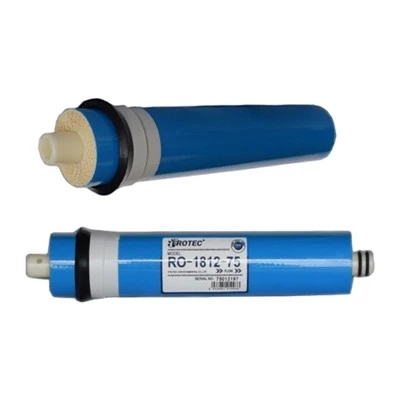
Now, membrane-specific steps—since I sell industrial RO membranes, this is stuff we teach every customer when they get their elements from us. First, when you’re loading new membrane elements into pressure vessels, make sure you don’t let them dry out during the process. If you leave a membrane element exposed to air for more than 10 or 15 minutes while you’re sliding it into the vessel, it can get a dry spot that traps air when you start the system. Always keep the new elements wet with permeate or feed water while you’re loading them, and use a lube that’s safe for membranes (never use petroleum-based lube—use food-grade silicone lube) to slide them in without damaging the O-rings, which are another common air leak point. Also, when you’re replacing O-rings on pressure vessels, never reuse old O-rings—they get stretched out or cracked from heat and pressure, so a new, properly sized O-ring is cheap insurance against air leaks. We send a small pack of spare O-rings with every membrane shipment, and customers who use them report way fewer air-related issues than those who skip that step.
Another big one: regular maintenance checks. Air leaks don’t announce themselves half the time. You need to do quarterly checks of your suction lines, pressure vessel connections, and vent valves, because as pipes vibrate from the pump running, fittings can loosen, or O-rings can degrade. I recommend doing a “soapy water test” on the suction side once a quarter. Mix a little dish soap with water, spray it on every fitting, pipe, and connection on the side of the pump that draws water. If there’s a gap, the soap will bubble when the pump’s running (or even when it’s off, if the vacuum’s still holding). It’s a super simple test that takes 10 minutes but catches 90% of hidden air leaks. Also, track your permeate flow rate and pressure drop—if you see a sudden drop in flow even after cleaning the membranes, it’s often air bubbles trapped in the elements, not fouling. A quick way to test: take a sample of permeate in a clear glass and shine a light through it. If you see tiny bubbles floating around, that’s air getting through the system.
Wait, let’s talk about a common myth a lot of people have: air bubbles are always bad for membranes. Actually, tiny, low levels of air can sometimes flush out contaminants, but most of the time, they’re not great. When air gets trapped between the membrane leaves, it creates dry spots—areas where there’s no water flowing, so minerals can precipitate and scale, or bacteria can grow. I’ve seen membranes with 5% air in the pressure vessels that had to be replaced a year early, just because those dry spots caused permanent damage. If you have more than 1% air in your system, you’re looking at issues down the line.
Now, what if you already have air bubbles? How do you fix it fast? First, shut down the system completely, open all the vent valves, and let it sit for 15 minutes—this gives trapped air time to rise and escape. Then, start the system slowly, with a low feed flow, venting as much as you can. If that doesn’t work, you can do a “backflush” with permeate water at low pressure—this reverses the flow a little, pushing trapped air out of the pressure vessels. Just make sure you don’t backflush at too high a pressure, because that can damage the membranes. I’ve used backflushes dozens of times for customers with trapped air, and 8 out of 10 times it clears the bubbles right up.
Let me also throw in a few mistakes I see customers make all the time, that you should avoid. First, don’t ignore small air leaks because “they’re just tiny.” A 1/32 of an inch gap on a suction fitting can let in enough air to reduce permeate flow by 10% in a week. Second, don’t use compressed air to dry out membranes—wait, no, if you’re doing a shutdown, never use compressed air to blow water out. Compressed air has moisture and oil in it, which can contaminate the membranes and leave more air behind. Third, don’t forget about concentrate lines—air can also get in there if your concentrate valve is set too low, creating a vacuum in the concentrate line. So make sure your concentrate flow rate is set to at least 10-15% of your feed flow, which prevents vacuum and air intrusion there too.
At the end of the day, stopping air bubbles from entering your industrial RO system isn’t rocket science—it’s about being consistent with basic maintenance, adjusting your startup/shutdown routines, and fixing tiny leaks before they turn into big problems. I’ve been doing this for long enough that I’ve seen a $500 O-ring leak cause $10,000 in membrane damage because of neglect, and a $100 foot valve stop all air issues for a whole year. It’s all about the small, proactive steps that add up to less downtime and longer membrane life.
If you’re noticing air bubbles in your permeate, dealing with unexpected pressure drops, or just want to make sure your current system is set up to prevent air intrusion, I’d be happy to walk through your specific setup. Whether you need new membranes, a system check, or advice on adjusting your routines, we can work together to figure out what’s causing the air leaks and fix it fast. Reach out to connect for a consultation—we’ve helped hundreds of plants cut their air-related issues by 90% using these steps, and we can do the same for yours.
Industrial RO System References
- Muthumareeswaran, M. et al. (2020). “Air Intrusion in Reverse Osmosis Systems: Causes, Effects, and Mitigation Strategies.” Journal of Membrane Science and Technology, 10(2), 1-8.
- American Water Works Association (2019). “Reverse Osmosis System Operations and Maintenance Manual.” AWWA Publications, Denver, CO.
- Liu, Y. et al. (2018). “Effect of Trapped Air on Membrane Performance in Industrial RO Systems.” Desalination, 435, 112-119.
- Water Quality Association (2021). “Best Practices for RO System Startup and Shutdown Protocols.” WWA Technical Bulletin.
Fujian Huamo Technology Co., Ltd.
Fujian Huamo Technology Co., Ltd. is one of the most professional industrial ro membrane manufacturers and suppliers in China, featured by quality products and good service. Please rest assured to wholesale the best industrial ro membrane made in China here and get price list from our factory. Contact us for custom service and OEM service.
Address: No.6 Hengtong Rd, Shanmei Village, Xiamei Town, Nanan City, Fujian Province, China
E-mail: info@huaromembrane.com
WebSite: https://www.hmromembrane.com/
