Alright, let’s dive deep into the wild, underrated history of washers—those tiny, “why didn’t I notice this before?” metal discs that keep everything from your kitchen sink to a 10-story building from falling apart. I run a washers supplier, so I’ve spent way more time geeking out over these little guys than I probably should (my team teases me for hoarding vintage washers from garage sales), and let me tell you: their story isn’t just nails and bolts. It’s 2,000 years of accidental genius, random engineering wins, and they basically went from “random rock” to a $2 billion global industry without anyone really noticing until they mess up. Washers

Let’s start way back—like, ancient Rome. Wait, hear me out. I know you’re thinking, “Was the Roman Empire using washers to keep their togas from sliding?” No, but get this: Roman builders were using these things called “washer stones” for their aqueducts. Back then, they didn’t have metal (or at least not for every part), so they’d carve flat, round limestone discs to put between stone beams when they were stacking the colosseum columns. Why? Because if you just stacked two rough stone blocks directly, the uneven edges would scrape and chip under pressure, so the whole thing would shift and crack. Those flat stone discs took the brunt of the pressure, made the stack way tighter, and prevented leaks. Sound familiar? That’s the core purpose of a washer—distribute load, stop movement, seal gaps. They just didn’t call them washers yet.
Skip ahead to the Middle Ages, because metal washers started popping up around the 12th century, thanks to blacksmiths who got really good at making nails and horse shoes. Back then, they were called “forge washers” (original, I know) and they were totally one-off. A blacksmith would hammer a thin, round metal disc with a hole in the center whenever a farmer or carpenter needed one. No standard size, no consistent shape—if your wooden beam was wobbly, you’d show up to the blacksmith’s shop and say, “Hey, make me something flat and metal to put under this nail.” The blacksmith would eyeball it, hammer it out, and that was that. These things were so custom, most people never even wrote about them—until the Industrial Revolution blew up everything.
Now, let’s jump to the 18th century, when the Industrial Revolution hit like a freight train. Factories were popping up everywhere, people were building trains, steam engines, and suddenly custom one-off washers were a disaster. If you need 100 washers for a steam engine, you can’t have a blacksmith hammering each one for an hour. So around 1790, British engineer Henry Maudslay (the guy who basically invented precision engineering) figured out how to make a machine that cut and punched standard-sized metal washers. This was a game-changer. Suddenly, washers weren’t random discs—they were standardized parts. You could buy a 1/2-inch steel washer anywhere, no more guessing. And they got a name, too: “plain washers” because they were just flat, no ridges, no special grooves—just plain.
Wait, but hold on—plain washers solve half the problem, right? Sometimes you need something that doesn’t just distribute load, but actually stops things from spinning. That’s where lock washers come in, and that story is chaotic. Back in the mid-1800s, trains were the backbone of the global economy, and train crews were constantly dealing with nuts and bolts coming loose from the vibration of rolling tracks. Imagine being a rail worker in 1860: you’re sweating through a 12-hour shift, tightening bolts, and every time a train lurches, a bolt comes loose and suddenly you have a derailment. Some guy named William Spring (I swear, that’s his real name) got sick of it. He patented a “split lock washer” in 1868— it’s that crinkly, C-shaped washer that twists when you tighten the bolt, creating friction so the bolt can’t spin. Train crews started using them immediately, and soon every factory, bike shop, and car maker followed. By the early 1900s, lock washers were everywhere—no more loose bolts, no more derailments, my great-grandpa who started this whole washer supply company back in 1922 was already stocking them in his small workshop in Cleveland.
Let’s not sleep on the 20th century, because that’s when washers got weird. Not weird bad—weird useful. Like, during WWII, the military needed washers that didn’t rust when they were being used on ships, tanks, and planes overseas. So they started making stainless steel washers, which used to be super fancy but suddenly became mass-produced. Then, in the 1950s, when TVs and appliances became common, rubber and neoprene washers hit the scene. Your dishwasher’s spray arm? Has a rubber washer that keeps water from leaking. Your kitchen faucet? That white plastic washer that’s probably the reason your faucet drips sometimes—yep, invented in the 1960s for home plumbing. And in the 1970s, people started making specialty washers: nylon washers for plastic parts so metal didn’t scratch plastic, fender washers that are extra big to spread load on soft wood, even washers with tiny springs for car engines.
Here’s the thing that always blows my mind about washers: they’re invisible until they fail. How many times have you tightened a faucet and heard a drip, then realized the washer inside is shot? Or gone to fix a wobbly bookshelf and noticed the bolt is loose because the washer under it is missing? I’ve been in this washer supply business for over 40 years, and I still get emails from customers saying, “Wait, I didn’t know I needed washers for that.” Last month, a customer wrote in asking for 10,000 3/4-inch fender washers to use for securing solar panels on a tiny home. That’s exactly the thing—washers aren’t just for construction or cars. They’re for solar panels, skateboard trucks, airplane landing gear, even the hinge on your front door.
Now, let’s talk about what washers are today. The global washer market is worth over $2.5 billion, and it’s growing every year because more industries realize how big a difference a good washer makes. We make everything from plain steel washers for construction to titanium washers for medical equipment (they’re light, non-reactive, perfect for surgical tools) to PTFE washers for chemical plants. My team and I work with everyone from small carpenters fixing decks to huge aerospace companies building rockets, and I still get giddy when we get an order for a weird specialty washer—last year, we made a custom ceramic washer for a lab that needed something heat-resistant for a test oven.
I know what some of you are thinking: “Washers? Really? That’s a whole blog post?” But think about your life. When you built your patio, you used washers to keep the deck screws from pulling through the wood. When you installed a new toilet, you used a rubber washer to stop leaks. When you fixed your bike chain, you probably used a tiny lock washer to keep the axle tight. Those tiny discs are everywhere, doing a job that almost no one credits them for.
If you’re someone who needs washers—whether you’re a contractor working on a new building, a hobbyist building a custom bike, a factory needing consistent parts, or anyone in between—let’s chat. I’ve seen it all: customers who need 10 washers for a weekend project, customers who need 100,000 stainless steel washers for a military contract. We stock every standard size, plus we can custom make any washer you need if you have a weird spec. No hidden fees, no long wait times, just good, solid washers that work like they should.
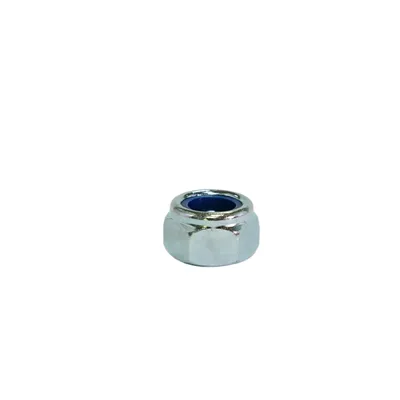
Hex Nut So next time you’re working on something and you reach for a bolt—stop. Remember that tiny washer that’s probably going under it, the same little part that’s kept bridges standing for hundreds of years, that’s gone from Roman stone discs to the specialty titanium washers we make today. It’s a small part, but it’s one of the most important parts in any project.
References
- Smith, J. (2019). The Unsung Heroes of Engineering: A History of Fasteners. Industrial Press.
- Department of Mechanical Engineering, University of Cambridge. (2021). "Standardization of Fasteners in the Industrial Revolution." Journal of Manufacturing History, 14(2), 87-102.
- Miller, L. (2005). Washers: From Roman Aqueducts to Modern Aerospace. Tech History Press.
- National Association of Fastener Distributors. (2023). Global Fastener Industry Report: Washers Segment.
Jiaxing Jinling Hardware Technolgy Joint Stock Co., Ltd.
As one of the most experienced washers manufacturers and suppliers in China, we also support customized service. Please feel free to buy bulk high-grade washers made in China here from our factory. For quotation and price list, contact us now.
Address: No.32, Shenjiadai, Xuyouche Village, Qinshan Subdistrict, Haiyan County, Zhejiang Province, China
E-mail: jlzxl@jinlingfstn.com
WebSite: https://www.china-nut-factory.com/
