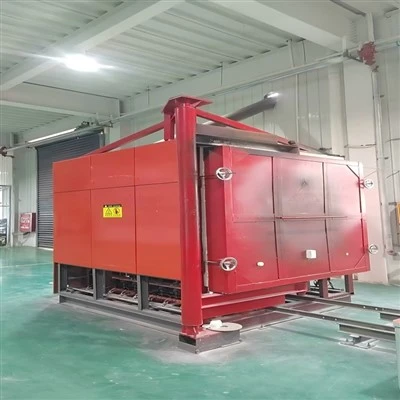
As a seasoned provider of sintering kilns, I’ve witnessed firsthand the transformative power of these remarkable machines in various industries. Sintering, a thermal process that fuses powder particles into a solid mass, is crucial in manufacturing numerous high – performance products. From ceramics and metals to advanced composites, sintered materials are everywhere, playing a vital role in engineering and technology. One of the most frequently asked questions I encounter from our clients is about the quality standards for products sintered in a sintering kiln. In this blog, I will delve into the key aspects of these quality standards, focusing on material properties, dimensional accuracy, and surface finish. Sintering Kiln
Material Properties
First and foremost, material properties are at the heart of the quality standards for sintered products. These properties determine the product’s performance in its intended application. For a sintered product to meet high – end quality standards, it must possess the right combination of mechanical, physical, and chemical properties.
Density
Density is a fundamental property of sintered materials. It reflects the degree of compaction and bonding of powder particles during the sintering process. A higher density generally indicates better mechanical strength and fewer internal defects. In our experience, different applications require different density levels. For instance, in the aerospace industry, where lightweight yet strong components are essential, achieving an optimal density that balances weight and strength is crucial. Our sintering kilns are engineered to precisely control the sintering parameters to obtain the desired density. We can adjust factors such as temperature, holding time, and pressure to ensure that the powder particles are sintered to the ideal degree of density.
Hardness
Hardness is another critical mechanical property. It measures a material’s resistance to deformation, wear, and indentation. For sintered metals and ceramics, hardness is often related to the material’s microstructure and the quality of the sintered bond. A consistent hardness throughout the product is essential for uniform performance. Our sintering kilns can create a controlled environment where the sintering process produces a homogeneous microstructure, resulting in consistent hardness values. By closely monitoring the heating and cooling rates, we can optimize the precipitation and distribution of hardening phases within the material.
Porosity
Porosity refers to the presence of voids or pores within the sintered material. While some applications may require a certain level of porosity, such as in filtration or catalytic materials, in most cases, low porosity is desirable. High porosity can reduce the mechanical strength, electrical conductivity, and corrosion resistance of the sintered product. Our advanced sintering kilns are capable of minimizing porosity through a combination of high – pressure sintering and an optimized gas atmosphere. By applying pressure during the sintering process, we can force the powder particles closer together, reducing the void spaces between them.
Dimensional Accuracy
Dimensional accuracy is another key quality standard for sintered products. Ensuring that the final product meets the specified dimensions is essential for its functionality and compatibility with other components in a larger system.
Shrinkage Control
During the sintering process, the powder compact undergoes shrinkage as the particles bond together. Accurately predicting and controlling this shrinkage is crucial for achieving dimensional accuracy. Our sintering kilns are equipped with advanced sensors and control systems that allow us to precisely measure and compensate for shrinkage. We use historical data from previous sintering runs and advanced modeling techniques to predict the shrinkage rate for a given material and process. This enables us to adjust the initial dimensions of the powder compact to account for the expected shrinkage, ensuring that the final product is within the specified tolerances.
Shape Retention
In addition to overall shrinkage, maintaining the shape of the sintered product is also important. Complex shapes, such as gears or turbine blades, require precise shape retention during sintering. Our kilns provide uniform heating and cooling, which helps prevent differential expansion and contraction that could lead to shape distortion. Moreover, we employ fixtures and tooling designed to support the powder compact during sintering, minimizing the risk of shape deformation. This attention to shape retention is especially important in industries such as automotive and electronics, where form – fitting components are essential.
Surface Finish
The surface finish of a sintered product can significantly impact its performance and aesthetics. A smooth and defect – free surface is often required for applications where the product will be in contact with other surfaces or where visual appearance matters.
Surface Roughness
Surface roughness is a measure of the irregularities on the surface of a sintered product. In many engineering applications, a low surface roughness is desirable to reduce friction, improve sealing, and enhance corrosion resistance. Our sintering kilns can produce products with a relatively smooth surface finish by optimizing the sintering parameters and the choice of raw materials. For example, using finer powder particles can result in a smoother surface after sintering. Additionally, post – sintering treatments such as machining or polishing can further improve the surface roughness to meet the required standards.
Surface Defects
Surface defects such as cracks, pits, and inclusions can severely affect the quality of a sintered product. These defects can reduce the mechanical strength, lead to premature failure, and affect the product’s appearance. Our quality control processes include thorough surface inspections using advanced imaging techniques to detect and eliminate any surface defects. We also optimize the sintering process to minimize the formation of surface defects. For instance, controlling the gas atmosphere during sintering can prevent the oxidation or contamination of the surface, which can cause defects.
The Role of Sintering Kilns in Meeting Quality Standards
As a sintering kiln provider, we understand that our equipment plays a crucial role in helping our customers meet these quality standards. Our sintering kilns are designed with state – of – the – art technology to provide precise control over the sintering process. They feature advanced temperature control systems that can maintain a uniform temperature throughout the kiln chamber, ensuring consistent sintering results. The ability to control the atmosphere inside the kiln, whether it’s a reducing, oxidizing, or inert gas environment, allows us to optimize the sintering conditions for different materials.
In addition, our kilns are built with high – quality materials and components to ensure reliability and long – term performance. We offer comprehensive after – sales support, including maintenance services, technical training, and process optimization advice. Our team of experts is always ready to work closely with our customers to understand their specific requirements and help them achieve the best possible sintering results.
Conclusion and Call to Action
In conclusion, the quality standards for products sintered in a sintering kiln cover a wide range of aspects, from material properties and dimensional accuracy to surface finish. Our company is committed to providing high – quality sintering kilns that enable our customers to meet these stringent standards. Whether you are in the ceramics, metal, or composite industry, our sintering solutions can help you produce top – notch products.
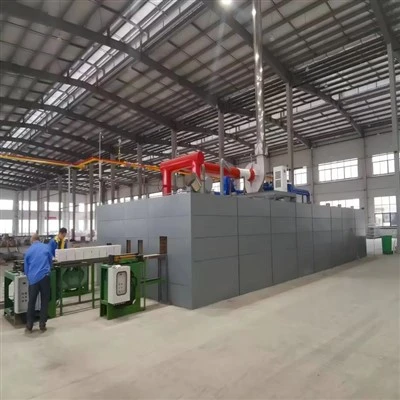
Ceramic Tunnel Kiln If you are interested in learning more about how our sintering kilns can enhance the quality of your sintered products or if you have any specific requirements for your sintering process, I encourage you to reach out to our sales team. We look forward to discussing your sintering needs and partnering with you to achieve success in your industry.
References
- German, R. M. (1996). Sintering Theory and Practice. Wiley.
- Zong, Y., & Gupta, M. (2005). Mechanisms of powder metallurgy processing. Materials Science and Engineering: A.
- Van Meel, J. A. (1955). Sintering of metallic powders. Metal Progress.
Henan Yaxin Kiln Co., Ltd.
Henan Yaxin Kiln Co., Ltd. is one of the most professional sintering kiln manufacturers and suppliers in China. With abundant experience, we warmly welcome you to buy high quality sintering kiln with the latest design from our factory. Good service and punctual delivery are available.
Address: Jixian Industrial Zone, Shangqiu City, Henan Province
E-mail: 1543563178@qq.com
WebSite: https://www.hnyxkiln.com/
